Evaluating Mistick: A Practical Guide to This Versatile Brush Font
In the landscape of digital typography, finding a typeface that balances artistic flair with functional legibility is often a challenge. Designers frequently oscillate between rigid, geometric sans-serifs and overly decorative scripts that sacrifice readability for style. Mistick occupies a distinct middle ground in this spectrum. It is a brush font characterized by a natural, handwritten aesthetic that mimics the fluid motion of a paintbrush or marker. However, its value extends beyond simple visual appeal; it serves as a practical tool for branding, apparel design, and creative projects requiring a human touch. Understanding where Mistick fits within your toolkit requires an honest assessment of its features, limitations, and how it compares to other approaches in the market.
The Core Characteristics of Mistick
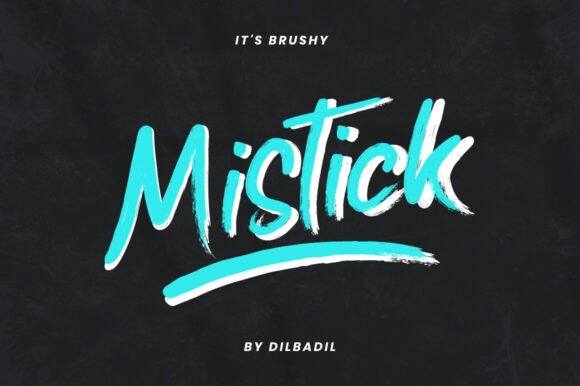
At its foundation, Mistick is designed to replicate the organic variability found in hand lettering. Unlike standard calligraphy fonts that rely on strict stroke rules and uniform weight, Mistick embraces irregularity. The varying thickness of the strokes and the slight imperfections in the curves give it an authentic feel, suggesting that a real person created the text rather than a computer algorithm. This "imperfect perfection" is what makes it particularly effective for modern design trends that favor authenticity over polish.
A defining feature of Mistick is its inclusion of eight unique swashes. In typography, swashes are extended strokes or decorative flourishes that extend from the main body of a letter. While many script fonts include a single alternate character set, providing eight options allows for significant customization. Designers can mix and match these swashes to create unique ligatures, frame specific words, or add dynamic movement to a layout without needing to manually draw vector paths in illustration software. This built-in versatility reduces production time while maintaining a high level of creativity.
Comparing Mistick to Traditional Script Fonts
When evaluating Mistick against other categories of handwritten fonts, the distinction lies primarily in the texture and application. Traditional cursive scripts often prioritize elegance and continuity, connecting letters in a seamless flow suitable for wedding invitations or formal stationery. These fonts typically feature high contrast between thick and thin lines, which can sometimes lead to legibility issues at smaller sizes or on textured surfaces.
In contrast, Mistick leans towards a bolder, more casual presentation. Its stroke width is generally more consistent, making it far more robust for applications like t-shirt designs or bag prints where the ink may bleed slightly into fabric fibers. If you compare Mistick to a fine-line fountain pen font, the difference is immediately apparent in terms of impact. Fine-line fonts offer delicacy but lack the presence required for large-scale signage or bold logos. Mistick, with its heavier brush strokes, commands attention and remains readable even when scaled down or viewed from a distance.
Furthermore, compared to "marker" style fonts that often appear flat and synthetic, Mistick retains a sense of depth through its simulated brush pressure. Many generic brush fonts fail to capture the nuance of a real brush, resulting in characters that look stamped rather than painted. Mistick addresses this by incorporating subtle variations in opacity and edge roughness, giving it a tactile quality that elevates the overall design.
Strengths and Tradeoffs in Design Application
The strengths of Mistick are most evident in projects that require a balance of professionalism and approachability. For instance, a coffee shop logo benefits from the warmth of a handwritten style without appearing sloppy. Similarly, fashion brands often utilize brush fonts to convey a sense of artisanal craftsmanship. The inclusion of the eight swashes allows designers to create custom arrangements that feel bespoke, avoiding the "cookie-cutter" look common with free or low-quality typefaces.
However, there are tradeoffs to consider. Because Mistick is a display font, it is not intended for long-form body copy. Using it for paragraphs of text will result in poor readability due to the complex shapes and variable spacing inherent in brush styles. It excels in headlines, short slogans, and monograms but struggles when applied to dense information. Additionally, while the swashes offer great flexibility, they require careful kerning. Placing too many decorative elements close together can clutter a design, creating visual noise rather than interest.
Another consideration is the context of the medium. On a smooth surface like paper or a screen, Mistick renders beautifully. On rougher textures, such as unbleached cotton bags or distressed wood, the fine details of the swashes might get lost if the print resolution is insufficient. Designers must evaluate the output medium carefully. If the project involves high-contrast printing on dark fabrics, the lighter parts of the brush strokes in Mistick may need adjustment to ensure visibility.
Determining the Best Fit for Your Project
Deciding whether Mistick is the right choice depends heavily on the specific goals of your project. It is an excellent option when the brand identity relies on concepts like creativity, freedom, and personal expression. Startups in the lifestyle, wellness, or creative arts sectors often find that the organic nature of Mistick aligns well with their messaging. It softens the corporate edge of a business, making it feel more accessible and relatable to consumers aged 20–50 who value authenticity.
Conversely, Mistick may not be the appropriate choice for industries that demand strict formality, such as legal services, medical institutions, or financial reporting. In these contexts, the playful and irregular nature of the font could undermine the perception of stability and precision. Similarly, if a project requires multilingual support with complex diacritics or non-Latin scripts, one must verify the character set coverage. While Mistick covers standard Latin characters effectively, specialized linguistic requirements might necessitate a different solution.
For designers looking to maximize the utility of Mistick, pairing it with a clean, neutral sans-serif font is a proven strategy. This combination creates a visual hierarchy where the brush font grabs attention for headlines, and the sans-serif ensures clarity for supporting text. This approach mitigates the risk of the design becoming too busy while leveraging the emotional impact of the handwritten style.
Practical Considerations for Implementation
When integrating Mistick into a workflow, the eight swashes should be treated as modular assets rather than automatic defaults. Not every word needs a flourish. Strategic placement—such as adding a swash only to the first letter of a headline or using a tail to underline a key phrase—often yields better results than applying them indiscriminately. This selective approach demonstrates a higher level of design maturity and prevents the work from looking overly decorated.
Furthermore, testing the font across different scales is essential. What looks striking at 72 points may lose its definition at 12 points. Before finalizing a logo or packaging design, it is prudent to mock up the text on the actual product. Seeing Mistick printed on a tote bag or embroidered on a shirt provides immediate feedback on whether the brush strokes hold up under real-world conditions.
Ultimately, Mistick represents a strong option for designers seeking a versatile, expressive typeface that bridges the gap between digital efficiency and handcrafted charm. By understanding its specific strengths, recognizing its limitations regarding body copy, and utilizing its swash features strategically, creators can produce work that feels both professional and uniquely human. Whether for a new brand identity or a creative merchandise line, Mistick offers a reliable foundation for projects that need to stand out without shouting.