Funky Monday: A Practical Evaluation of the Retro-Modern Typeface
In the landscape of digital typography, few categories are as distinct yet versatile as the retro-modern hybrid. Funky Monday occupies a specific niche within this category, offering a design that bridges the gap between nostalgic aesthetics and contemporary usability. For designers, marketers, and content creators evaluating typefaces for their next project, understanding the functional and aesthetic implications of this font is essential. This evaluation explores the characteristics of Funky Monday, its potential applications, and the strategic considerations required to determine if it aligns with your specific design goals.
Defining the Aesthetic and Structure
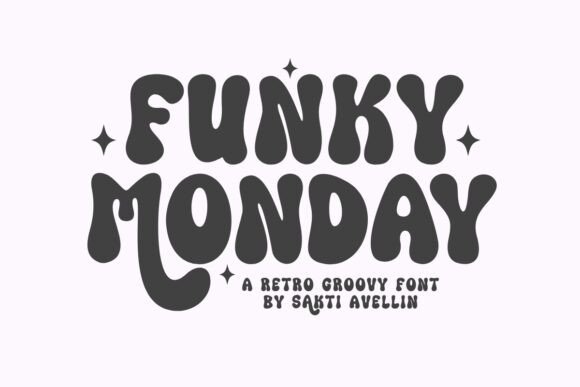
Funky Monday is characterized by a synthesis of retro influences and modern execution. The typeface does not merely replicate vintage styles; instead, it interprets them through a lens that prioritizes current readability standards while maintaining a cheerful, energetic vibe. Visually, the font relies on bold weights and vibrant character shapes. The letterforms are defined by curved edges and dynamic strokes that prevent the text from feeling static or rigid.
A defining feature of the design is its playful impression. Unlike strict geometric sans-serifs or traditional serif fonts, Funky Monday introduces a sense of movement. The curves are exaggerated just enough to suggest fun without compromising legibility at standard sizes. Furthermore, the inclusion of several alternative letters provides users with the ability to customize the visual rhythm of their text. These alternates allow for subtle variations in headlines or logos, adding a layer of uniqueness that generic typefaces often lack.
Reasons to Consider Funky Monday
Designers often seek a typeface that can convey a specific mood instantly. Funky Monday is frequently considered when the project requires an atmosphere of energy and approachability. Its bold nature ensures that headlines grab attention, while the colorful potential of its design (when applied in multi-colored layouts) creates a lively visual hierarchy.
The primary reason to evaluate this font is its versatility in creative applications. It is particularly effective for:
- Branding for youth-oriented products: The playful shapes resonate well with younger demographics who appreciate non-traditional, expressive designs.
- Event marketing: Posters, flyers, and social media graphics for parties, festivals, or community gatherings benefit from the font's inherent cheerfulness.
- Creative portfolios: Designers looking to showcase a fun, experimental side of their work may find the dynamic letter shapes useful for personal branding.
Additionally, the availability of alternative glyphs offers a practical advantage. In logo design, where uniqueness is paramount, the ability to swap specific characters allows for tighter kerning or more distinctive wordmarks without needing to commission custom lettering.
Benefits and Tradeoffs
While Funky Monday offers distinct advantages, a balanced evaluation requires acknowledging its limitations. The benefits are clear: high impact, strong emotional resonance, and flexibility through alternate characters. However, these strengths come with tradeoffs that must be weighed against project requirements.
Readability Constraints: The very curves and dynamic shapes that make the font playful can hinder readability in long-form text. The irregularity of the strokes may cause eye strain if used for body copy in paragraphs exceeding a few sentences. Therefore, it is best suited for short bursts of text, such as titles, subtitles, or call-to-action buttons.
Contextual Limitations: The "funky" aesthetic implies informality. Using this typeface in contexts requiring authority, seriousness, or minimalism can create a tonal dissonance. For instance, a legal document or a financial report would likely suffer from the inclusion of such a whimsical font, as it undermines the perception of professionalism.
Color Dependency: While the font structure supports color, the design often leans heavily on bold, saturated palettes to achieve its full effect. If a project requires a monochromatic or muted color scheme, the font may lose some of its intended energetic impact, appearing flat or overly decorative.
Ideal Situations for Application
To maximize the effectiveness of Funky Monday, it should be deployed in situations where the goal is engagement and excitement. It is a strong fit for projects where the brand voice is described as friendly, accessible, and spirited.
Consider using this typeface when:
- The target audience values creativity and expression over formality.
- The medium allows for large display sizes, ensuring the details of the curved shapes remain visible.
- The design system includes complementary colors that enhance the font's cheerful nature.
- The content is concise, focusing on headlines or key phrases rather than dense information.
In these scenarios, the font acts as a visual anchor, immediately setting the tone for the user experience. The dynamic letter shapes guide the eye naturally, making the content feel less like a static message and more like an invitation.
When to Consider Alternatives
Despite its charm, there are numerous scenarios where alternatives to Funky Monday are worth considering. If the primary objective is clarity and information density, a neutral sans-serif or a highly legible serif font will serve the reader better. Projects involving technical documentation, academic research, or corporate communications typically require a typeface that recedes into the background, allowing the content to take precedence.
Furthermore, if the design aesthetic aims for minimalism or brutalism, the decorative elements of Funky Monday may clash with the desired clean lines and stark contrasts. In cases where accessibility is a critical concern—specifically for users with dyslexia or visual impairments—the complex curves and varying stroke widths might present unnecessary barriers. In such instances, a simpler, more uniform typeface is a responsible choice.
Practical Decision-Making Insights
Deciding whether to integrate Funky Monday into a design system requires a methodical approach. Begin by auditing the emotional goals of the project. Does the brand need to appear authoritative, or does it need to connect on a human, playful level? If the latter, proceed to test the font in context.
Create mockups that pair the font with other design elements. Pay close attention to how the alternative letters interact with the main set. Do they create a cohesive look, or do they introduce visual noise? Test the font at various sizes to ensure the curves do not disappear or become illegible on smaller screens.
Finally, consider the longevity of the trend. While retro-modern styles have staying power, the specific interpretation of "funky" can date quickly. Evaluate whether the design needs to remain relevant for five years or if it is a short-term campaign. If long-term relevance is key, ensure that the font is paired with timeless design principles so that the overall composition remains effective even if the specific style evolves.
Ultimately, Funky Monday is a powerful tool for specific creative challenges. It excels when the goal is to inject personality and energy into a visual identity. By understanding its strengths regarding boldness and playfulness, as well as its limitations in formal or dense textual environments, designers can make informed decisions that align with their broader strategic objectives.