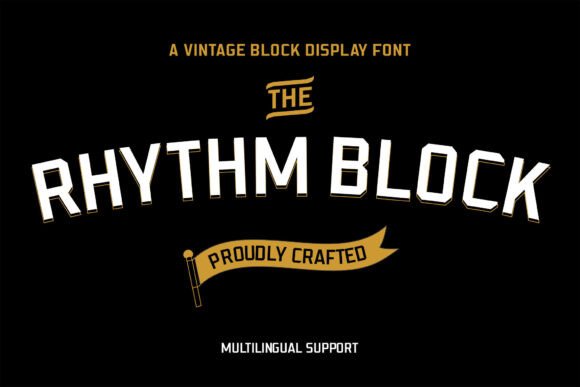
Rhythm Block: The Retro Display Font That Demands Attention
In the crowded landscape of digital design, silence is often the enemy. Whether you are crafting a logo for a new craft brewery, designing a headline for a blog post about vintage technology, or creating a poster for a local concert series, your typography needs to speak loudly and clearly. This is where Rhythm Block steps in. It is not merely a font; it is a visual statement. With its bold, blocky letters and distinct old-school aesthetic, Rhythm Block captures the essence of mid-century advertising and classic print culture. However, like any powerful tool, it requires a steady hand. Using it without understanding its weight and structure can lead to designs that feel cluttered rather than commanding.
Understanding the Power of Rhythm Block
Rhythm Block is a vintage-style display font characterized by thick, square shapes that offer high legibility even at smaller sizes. Its retro feel makes it an instant hit for projects aiming to evoke nostalgia, strength, or reliability. When you apply this typeface to a logo, it conveys stability. On a poster, it creates immediate focal points. The geometric nature of the characters ensures that the text stands out against complex backgrounds, making it a favorite among graphic designers who need their headlines to cut through the noise.
The appeal of Rhythm Block lies in its simplicity. In an era dominated by thin, minimalist sans-serifs, the heavy strokes of this font provide a necessary contrast. It feels tactile, almost like ink pressed deeply into paper. For entrepreneurs and marketers, this translates to trust. A brand name set in Rhythm Block suggests that the business has been around for decades, even if it launched yesterday. But while the font's versatility is a strength, it is also the source of many common design pitfalls.
Common Mistakes When Using Bold Display Fonts
One of the most frequent errors I see beginners and even seasoned professionals make is overusing Rhythm Block. Because the font is so visually striking, there is a temptation to use it for everything—from body paragraphs to captions. This is a critical mistake. Rhythm Block is designed as a display font, meaning it is intended for short bursts of text like titles, headers, and slogans. When used for long-form content, the thick, square shapes become exhausting to read. The eye struggles to track lines of dense, heavy text, leading to poor readability and a frustrated audience.
Another overlooked detail is the lack of proper spacing. The blocky nature of the letters means they occupy significant horizontal space. If you do not adjust the tracking (letter-spacing) carefully, the characters can appear to merge together, losing their definition. Conversely, too much space can break the rhythm of the word, making the design look disjointed. This balance is delicate. Without it, the "retro" charm turns into a messy, unprofessional appearance that undermines the message you are trying to communicate.
Ignoring Context and Contrast
Design is all about context, and Rhythm Block demands a specific environment to shine. A common misunderstanding is pairing this heavy font with other equally heavy elements. If you place Rhythm Block on a busy background or next to another bold typeface, the result is visual chaos. The font loses its impact because there is no hierarchy. To make Rhythm Block work, you must give it room to breathe. It needs negative space and a contrasting partner—usually a clean, lightweight sans-serif or a simple serif—to handle the supporting text.
Furthermore, color choices play a massive role. While black and white is a classic combination that works well with vintage styles, using low-contrast colors can make the thick strokes disappear. If you are designing for digital screens, ensure that the color palette provides enough luminance difference between the text and the background. Failing to check this can render your headline invisible on mobile devices, defeating the purpose of choosing such a prominent font in the first place.
Practical Strategies for Better Results
To avoid these pitfalls and maximize the potential of Rhythm Block, start by defining the scope of its use. Limit the font to headlines, logos, and short calls to action. For any paragraph longer than two sentences, switch to a more readable companion font. This approach maintains the retro vibe while ensuring your audience can actually consume the information you are presenting.
When setting up your document, pay close attention to kerning and leading. Because the letters are square and thick, they often require slightly tighter kerning than standard fonts to look cohesive. Experiment with the settings until the gaps between letters feel uniform but not cramped. Similarly, increase the line height (leading) if you are using multiple lines of Rhythm Block. This extra vertical space prevents the bottom of one line from colliding with the top of the next, preserving clarity.
Consider the medium before you commit. If you are designing for print, Rhythm Block is excellent for large formats like billboards or posters where the scale allows the details to pop. For web design, test how the font renders across different browsers and screen resolutions. Sometimes, the sharp edges of blocky fonts can pixelate on lower-resolution displays. If you notice blurring, consider adding a subtle drop shadow or adjusting the anti-aliasing settings to maintain crispness.
Evaluating Your Design Choices
Before finalizing any project featuring Rhythm Block, step back and evaluate the overall composition. Ask yourself: Is the hierarchy clear? Does the headline command attention without overwhelming the rest of the page? If the answer is no, you may have overused the font or failed to provide enough contrast. Remember, the goal is to guide the viewer's eye, not to dazzle them into confusion.
It is also worth considering the emotional tone of your project. Rhythm Block carries a strong, confident, and sometimes aggressive energy. It is perfect for sports teams, industrial brands, or retro-themed events. However, it might feel out of place for a soft, organic wellness brand or a delicate children's book. Ensure that the personality of the font aligns with the values of the brand or the message of the content. A mismatch here can send mixed signals to your audience, reducing the effectiveness of your communication.
Final Checks Before You Publish
Finally, always review your work on multiple devices. What looks great on a desktop monitor might squish together on a smartphone screen. Check the legibility of your Rhythm Block headlines on small screens and adjust the font size or spacing accordingly. If the text becomes illegible, it is better to simplify the design or choose a more flexible alternative for mobile views.
By treating Rhythm Block with respect and understanding its limitations, you can create designs that are both nostalgic and modern. It is a font that rewards careful application. When used correctly, it adds a layer of sophistication and strength that elevates your entire project. Avoid the trap of using it everywhere, focus on contrast and spacing, and let the bold, blocky letters do what they do best: capture attention and leave a lasting impression.