Meet Rounded Robin: The Spirited Display Font That Brings Warmth to Design
In the vast and ever-evolving landscape of digital typography, finding a font that truly resonates with your brand's personality can feel like searching for a needle in a haystack. Enter Rounded Robin, a captivating and spirited display font designed to infuse warmth and an irresistible sprinkle of sweetness into any creative project. Whether you are crafting a logo for a boutique baby store or designing a landing page for an educational app, Rounded Robin stands out as a unique typographic solution that balances playfulness with professional versatility.
This article explores the essence of Rounded Robin, delving into its distinctive features, practical applications, and the significant role it plays in modern design. By understanding the nuances of this typeface, designers, entrepreneurs, and creatives can unlock new realms of visual storytelling that echo their personal touch and connect deeply with their audience.
The Essence of Rounded Robin: More Than Just a Typeface
At its core, Rounded Robin is not merely a collection of characters; it is an emotional conduit. In the world of graphic design, typography is often described as the "voice" of a brand. While serif fonts might sound authoritative and sans-serif fonts might sound modern and clean, Rounded Robin speaks in a tone that is friendly, approachable, and undeniably joyful. Its name suggests a character—perhaps a bird known for its chirping song or a person known for their kindness—and the visual form perfectly mirrors this spirit.
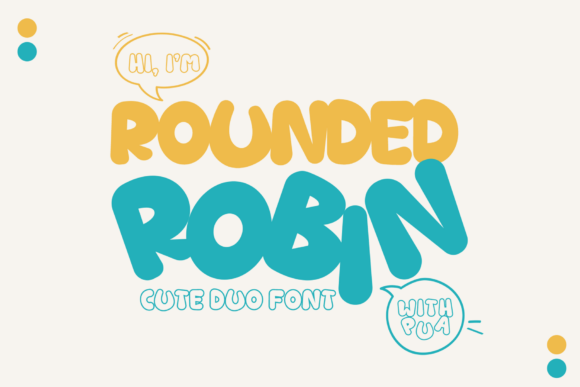
The font is characterized by its soft, rounded terminals and open counters, which eliminate any sense of sharpness or aggression. This geometric softness is what makes it so effective for projects requiring a gentle touch. It is a display font, meaning it is best suited for headlines, logos, and short bursts of text where impact and style are paramount. However, unlike many display fonts that sacrifice readability for flair, Rounded Robin maintains a level of legibility that ensures your message is received clearly while still delighting the eye.
A Duo of Styles: Solid and Outline Options
One of the most compelling aspects of Rounded Robin is its versatility, achieved through a duo of distinct weight options: solid and outline. This duality opens the doors to a realm of varied design opportunities that single-weight fonts simply cannot offer.
- Solid Weight: The solid version provides a bold, confident presence. It is ideal for primary headlines, main logos, and any area where the text needs to grab immediate attention. The filled-in letters convey stability and substance, grounding the whimsical nature of the shape.
- Outline Weight: Conversely, the outline option offers a lighter, airier aesthetic. This style is perfect for secondary text, decorative elements, or layering over images without obscuring them. It adds a delicate touch that feels sophisticated yet playful.
By utilizing both styles in tandem, designers can create dynamic visual hierarchies. For example, a logo might feature the brand name in solid Rounded Robin, with a tagline underneath in the outline variant. This contrast creates depth and interest, guiding the viewer's eye naturally through the composition.
Customization Through Stylistic Alternatives
True creativity often lies in the details, and Rounded Robin takes customization to another level with the inclusion of extensive stylistic alternatives. These are special glyphs or character variations hidden within the font file that allow users to swap standard letters for more expressive versions.
Imagine designing a children's book cover where the letter "A" looks like a tiny tent, or a bakery logo where the "S" curls like a ribbon. With stylistic sets (often accessed via software like Adobe Illustrator, Photoshop, or Canva), you can fashion designs that echo your personal touch without needing to manually edit vector paths. This feature empowers designers to break away from the rigid uniformity of standard text, injecting a hint of whimsy into every word.
These alternatives are particularly useful for creating unique branding elements. A startup might use a specific stylistic set to differentiate their logo from competitors, ensuring their identity is instantly recognizable. It transforms the font from a static tool into a flexible canvas for artistic expression.
Ideal Applications: Where Rounded Robin Shines
Rounded Robin is an ideal match for projects that call for a kid-friendly, educational, infant-focused, or feminine appeal. Its inherent warmth makes it a natural choice for industries where trust, care, and joy are central values. Let's explore some practical scenarios where this font excels.
Product Packaging and Branding
In the competitive world of retail, packaging is the first point of contact between a product and a consumer. For brands selling organic baby food, artisanal sweets, or eco-friendly toys, Rounded Robin can make a package pop off the shelf. The font's friendly curves suggest safety and quality, reassuring parents and caregivers. When used on labels or boxes, it conveys a message of "handmade with love," which is a powerful selling point in today's market.
Educational Materials and Children's Media
Education is all about engagement, especially for young learners. Textbooks, worksheets, and online learning platforms benefit immensely from a font that is easy to read and fun to look at. Rounded Robin helps reduce the intimidation factor of learning, making educational content feel like an adventure rather than a chore. Its clear shapes assist early readers in distinguishing letters, while its playful nature keeps them interested.
Logos and Digital Interfaces
From adorable logos for nurseries and boutiques to crafting visually appealing landing pages for lifestyle blogs, Rounded Robin promises to infuse a splash of delight. In the digital realm, where user experience (UX) is king, a welcoming font can lower bounce rates and increase time on site. A landing page for a yoga studio or a female-focused wellness app using Rounded Robin immediately signals a safe, inclusive space.
Common Misunderstandings About Display Fonts
Despite its versatility, there are common misunderstandings regarding display fonts like Rounded Robin that potential users should be aware of to maximize their effectiveness.
- Misconception: "Display fonts are only for decoration." While they are visually striking, display fonts serve a functional purpose in establishing brand voice. They communicate emotion before the reader even processes the words.
- Misconception: "Rounded fonts are unprofessional." This is a dated assumption. Modern design trends increasingly favor human-centric, approachable aesthetics. Rounded fonts are widely used by major tech companies and startups to appear accessible and innovative.
- Misconception: "They are hard to read." As long as they are used appropriately for headlines and short copy, fonts like Rounded Robin are highly legible. The issue usually arises when they are forced into large blocks of body text, where a simpler sans-serif would be more appropriate.
Understanding these nuances allows designers to deploy Rounded Robin strategically, ensuring it enhances rather than hinders communication.
The Role of Typography in Modern Life and Business
In our hyper-connected world, visual communication happens in milliseconds. Consumers scroll through social media feeds, browse e-commerce sites, and interact with apps constantly. In this fast-paced environment, the right typography acts as a silent ambassador for your business or message. Rounded Robin fits seamlessly into modern life by bridging the gap between corporate professionalism and human connection.
For small business owners, choosing the right font is often one of the most impactful decisions they can make. It doesn't require a massive budget but can significantly elevate the perceived value of a brand. By adopting a font that aligns with their values—such as warmth, care, and creativity—businesses can foster deeper emotional connections with their customers.
Furthermore, in the realm of technology and web design, accessibility is becoming increasingly important. Fonts with clear, rounded forms are often easier for individuals with dyslexia or visual impairments to process compared to complex serifs or jagged edges. Thus, Rounded Robin is not just aesthetically pleasing; it also contributes to a more inclusive digital ecosystem.
Conclusion: Embrace the Whimsy
Rounded Robin is more than a font; it is a tool for storytelling, a catalyst for creativity, and a beacon of warmth in the digital landscape. With its unique combination of solid and outline options, coupled with rich stylistic alternatives, it offers designers the freedom to create something truly special. Whether you are building a brand for infants, designing educational resources, or launching a feminine-focused lifestyle product, this spirited typeface has the power to transform your vision into reality.
As you embark on your next design journey, consider how a splash of delight and a hint of whimsy can elevate your work. Rounded Robin invites you to step away from the rigid and embrace the soft, the sweet, and the sincere. In doing so, you don't just create a design; you create an experience that resonates, remembers, and endures.