Josilca: A Practical Evaluation of a Festive Display Typeface
In the realm of holiday graphic design, the choice of typography often dictates the immediate emotional response of the audience. While many designers reach for traditional serifs or classic blackletter styles to evoke nostalgia, there is a growing demand for typefaces that capture the energy and whimsy of the season without sacrificing legibility in specific contexts. Josilca enters this space as a distinct option, offering a bold, playful aesthetic tailored specifically for Christmas displays. It is not merely a decorative script but a structured display font designed to bring warmth and joy to greeting cards, posters, and party invitations. For professionals and creators managing seasonal campaigns, understanding the practical application and limitations of Josilca is essential for determining its place in a production workflow.
Defining the Character and Purpose of Josilca
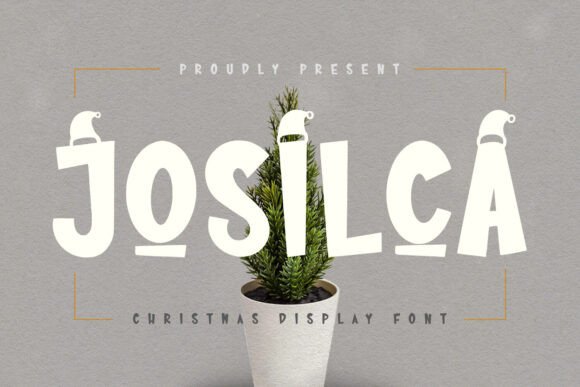
Josilca is fundamentally a display font, meaning it is engineered for large sizes and short bursts of text rather than extended body copy. Its character is defined by a festive architecture that mimics the irregularity and charm of hand-lettered holiday signage while maintaining the consistency required for digital reproduction. The font's primary purpose is to serve as a visual anchor in holiday-themed projects. When applied to a poster or an invitation, Josilca immediately signals "celebration" through its exaggerated curves, varying stroke weights, and cheerful spacing.
What makes Josilca worth discussing in a professional context is its balance between novelty and usability. Many holiday fonts lean so heavily into decoration that they become difficult to read or clash with modern design principles. Josilca attempts to bridge this gap. It retains enough structure to be legible at moderate sizes on print materials, yet it possesses enough stylistic flair to stand out in crowded social media feeds. This duality makes it a valuable asset for marketers and small business owners who need their holiday communications to feel personal and inviting without appearing amateurish.
Key Design Characteristics and Visual Strengths
The visual strength of Josilca lies in its bold weight and dynamic rhythm. Unlike thin, delicate scripts that can get lost in complex backgrounds, Josilca commands attention. The letterforms are thick and substantial, which translates well to various printing methods, including offset, screen printing, and vinyl cutting. This robustness ensures that the text remains crisp even when scaled down slightly for use on smaller items like gift tags or business card inserts.
A notable feature of the font is its playful inconsistency. The letters do not sit perfectly on a baseline; instead, they bounce and interact with one another, creating a sense of movement. This kinetic quality is crucial for holiday designs, where static, rigid text can feel cold and corporate. By introducing a human touch through these subtle variations, Josilca helps designers convey a message of warmth and community. Furthermore, the font includes a comprehensive set of characters that supports standard English usage, ensuring that most project titles and headlines can be rendered without resorting to workarounds or manual kerning adjustments that disrupt the flow.
Performance in Real-World Applications
Evaluating a typeface requires looking beyond its appearance in a specimen sheet and observing how it performs under real-world constraints. In the context of holiday marketing, Josilca excels in high-impact, low-text scenarios. For instance, on a large format event poster announcing a "Winter Gala," the font serves as an excellent headline. Its size and style draw the eye immediately, establishing the tone before the viewer reads the supporting details in a more neutral sans-serif or serif companion.
However, performance varies depending on the medium. On digital platforms, such as Instagram stories or email headers, Josilca renders effectively due to its vector-based nature, ensuring sharp edges on all devices. The bold strokes prevent pixelation issues common with thinner fonts on lower-resolution screens. In print, the font's reliability holds up well, provided the printer uses high-quality ink and paper stock. The thick lines minimize the risk of ink bleed, a common issue with intricate holiday scripts on porous paper.
One area where Josilca demonstrates practical value is in its versatility across different color palettes. Because the font relies on shape and weight rather than intricate internal details, it remains recognizable whether rendered in traditional red and green, metallic gold and silver, or even monochrome schemes for a minimalist holiday look. This flexibility allows brands to maintain their identity while adopting a seasonal theme, a critical consideration for entrepreneurs managing year-round brand consistency.
Usability, Flexibility, and Workflow Integration
From a technical standpoint, integrating Josilca into a design workflow is straightforward. Most major design software, including Adobe Illustrator, Photoshop, and Canva, supports the file formats typically associated with this type of font. This accessibility reduces the friction for freelancers and bloggers who may not have access to expensive proprietary tools. The font installs quickly and does not require complex configuration, allowing creators to move rapidly from concept to execution during the busy holiday season.
Flexibility is another strong point. Josilca works well alongside other typefaces, particularly clean geometric sans-serifs or traditional serifs. This pairing strategy allows designers to create a clear visual hierarchy. For example, using Josilca for the main title and a simple Helvetica or Garamond for the date, time, and location creates a balanced composition that is both festive and informative. This approach mitigates the risk of the design feeling cluttered or overwhelming, a common pitfall when using highly stylized fonts.
Reliability in terms of character coverage is generally sufficient for standard English projects. However, users should verify the specific version of the font they are using if their project requires special characters, ligatures, or support for languages other than English. While the core alphabet is robust, niche requirements might necessitate supplementary fonts or manual adjustments. For most general holiday projects, however, the included glyphs cover the necessary range of words and phrases used in invitations and greetings.
Ideal Use Cases and Audience Fit
Josilca is best suited for specific audiences and project types. It is an ideal choice for small business owners launching holiday sales events, as the font conveys excitement and urgency without being aggressive. Event planners organizing winter parties or community gatherings will find its cheerful look effective for invitations that need to feel welcoming. Additionally, educators and content creators producing holiday-themed worksheets, newsletters, or blog graphics can leverage Josilca to add a layer of engagement that resonates with families and children.
For professionals in the publishing industry, Josilca offers a fresh alternative for book covers, chapter headings, or promotional materials related to holiday fiction or non-fiction. Its ability to evoke a specific mood makes it a strategic tool for authors and publishers aiming to connect emotionally with readers during the Q4 shopping season. Similarly, freelance graphic designers can include Josilca in their portfolio to demonstrate their ability to handle thematic typography effectively, showcasing a range beyond standard corporate aesthetics.
Limitations and Professional Considerations
Despite its strengths, Josilca is not a universal solution. As a display font, it has significant limitations regarding readability in long-form text. Attempting to use Josilca for paragraphs, body copy, or detailed instructions will result in a visually chaotic and difficult-to-read layout. The irregular spacing and varying heights of the letters disrupt the reading flow, causing eye strain for the audience. Therefore, it is imperative to restrict its use to headlines, subheads, and short phrases.
Another consideration is the potential for overuse. Because Josilca is inherently festive, relying on it for every holiday-related communication can lead to visual fatigue. To maintain impact, it should be used sparingly and strategically. Designers should also be mindful of the background complexity. Placing Josilca against a busy pattern or a photo with high contrast can reduce its legibility, even with its bold weight. In such cases, adding a subtle drop shadow or a solid background block behind the text can enhance clarity.
Finally, while the font is versatile, it carries a specific cultural association with Christmas and winter holidays. Using it outside of this context, such as for a summer sale or a corporate annual report, would likely confuse the audience and dilute the brand message. The font's effectiveness is tightly coupled with the seasonal timing, making it a tactical asset for Q4 campaigns rather than a year-round staple.
Final Assessment and Recommendations
Josilca represents a thoughtful addition to the toolkit of any designer, marketer, or creator focused on holiday communications. Its blend of playful energy and structural integrity allows it to perform well across various mediums, from digital ads to printed invitations. By prioritizing boldness and warmth, it addresses the need for designs that feel personal and celebratory in an increasingly automated digital landscape.
For those considering Josilca for their next project, the recommendation is clear: utilize it as a headline font to establish a festive tone, pair it with a neutral typeface for body text, and ensure it is used within the appropriate seasonal context. When applied with these guidelines in mind, Josilca can significantly enhance the visual appeal and emotional resonance of holiday materials, helping businesses and individuals connect more effectively with their audience during the most important season of the year. Its value lies not just in its aesthetic, but in its ability to communicate joy efficiently and professionally.