Santa Coffee: A Practical Evaluation of This Festive Typeface
When selecting typography for holiday-themed projects, the decision often hinges on balancing whimsy with readability. Santa Coffee emerges as a distinct option in this category, designed specifically to capture the spirit of the Christmas season through its decorative elements and nostalgic flair. For designers, marketers, and crafters evaluating resources for greeting cards, gift tags, and seasonal branding, understanding the specific characteristics of Santa Coffee is essential. Unlike standard serif or sans-serif fonts that require external decoration to convey a mood, Santa Coffee integrates festive motifs directly into its letterforms. This article examines the font's unique attributes, compares it to broader typographic approaches, and outlines the scenarios where it offers the most value.
Defining the Distinctive Character of Santa Coffee
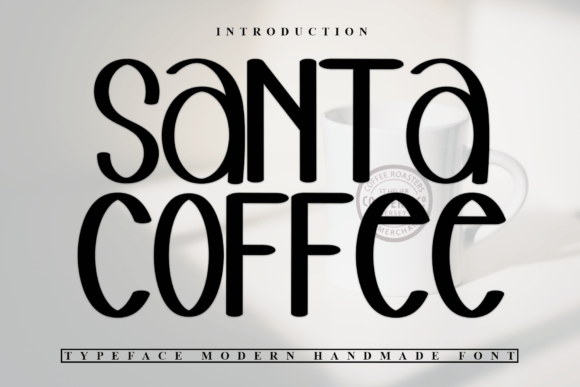
The primary differentiator of Santa Coffee lies in its classification as a display typeface with built-in ornamentation. While many holiday fonts rely on simple rounded edges or slight curves to suggest softness, Santa Coffee incorporates complex decorative details that evoke traditional winter imagery. These elements are not merely superficial; they are woven into the structure of the characters, creating a cohesive visual narrative that suggests merriment and enchantment. The font is particularly noted for its PUA (Private Use Area) encoding, a technical feature that significantly impacts its usability.
PUA encoding allows the font file to contain a vast array of glyphs, ligatures, and alternate characters that go beyond the standard ASCII set. In practical terms, this means a user can access intricate flourishes, seasonal icons, and specialized character combinations without needing to download separate icon packs or use complex graphic design software workarounds. When you type specific character sequences, the font automatically renders these enhanced graphics. This capability transforms the typing process into a more dynamic experience, allowing for immediate customization of text blocks. For professionals who need to produce high-quality assets quickly, this efficiency is a significant advantage over fonts that require manual illustration of decorative elements.
Comparing Santa Coffee to Alternative Holiday Styles
To evaluate Santa Coffee effectively, it must be viewed within the context of other available typographic solutions. The market for holiday fonts generally falls into three broad categories: script-based cursive styles, bold block letters, and highly decorative display fonts like Santa Coffee. Each category serves a different function and carries specific tradeoffs regarding legibility and application scope.
Script-based holiday fonts often prioritize elegance and flow, mimicking handwritten calligraphy. While these are excellent for personal notes or romantic invitations, they can sometimes struggle with clarity at smaller sizes or when used in dense paragraphs. In contrast, Santa Coffee adopts a more structured approach, maintaining a degree of readability even while heavily decorated. However, it is still fundamentally a display font, meaning it is best suited for headlines, short phrases, and titles rather than body copy. Comparing it to bold block letter options reveals another distinction: block letters offer maximum impact and visibility but often lack the nuanced charm and nostalgia that Santa Coffee provides. Where block letters feel modern and commercial, Santa Coffee leans toward the traditional and artisanal.
Another critical comparison involves the method of decoration. Many generic holiday fonts achieve their look through simple color changes or basic shapes appended to letters. Santa Coffee, with its PUA-encoded ligatures, offers a deeper level of integration. Instead of adding a snowflake next to a letter, the font might integrate a subtle snowflake motif into the curve of an "S" or replace a dot on an "i" with a holly berry automatically. This level of detail sets it apart from standard alternatives that require additional design effort to achieve a similar aesthetic depth.
Evaluating Technical Usability and Workflow Integration
The technical architecture of a font plays a crucial role in the design workflow. The PUA encoding mentioned earlier is a decisive factor for users working across various platforms. Because the glyphs are embedded within the font file itself, compatibility issues are minimized compared to workflows that rely on external clip art or layered vector files. Designers can utilize Santa Coffee in standard word processors, desktop publishing software, and web design tools, provided the environment supports custom font rendering.
However, there are considerations regarding cross-platform consistency. If a project requires collaboration among team members using different operating systems, ensuring everyone has the correct version of the Santa Coffee font installed is vital to prevent glyph substitution errors. While the PUA system is robust, it relies on the receiving device having the font file to interpret the special characters correctly. For static print materials, this is rarely an issue, but for digital assets shared widely, such as email headers or social media graphics, converting text to outlines or images may be necessary to preserve the intended visual effect. This is a common tradeoff with any highly customized display font, but it is worth noting during the planning phase.
Identifying the Best-Fit Situations for Santa Coffee
Determining whether Santa Coffee is the right choice depends largely on the specific goals of the project. It excels in environments where atmosphere and emotional connection are paramount. For instance, when designing physical greeting cards, the font's whimsical nature complements the tactile quality of paper and ink, enhancing the overall feeling of a handmade gift. Similarly, for gift tags, where space is limited and every character counts, the integrated decorations allow for a complete design statement without cluttering the layout with extra elements.
In the realm of marketing, Santa Coffee is well-suited for holiday promotions, event flyers, and seasonal packaging labels. Its nostalgic ambiance can help brands connect with consumers on an emotional level, evoking memories of past Christmases. The cheerful tone of the typography aligns perfectly with campaigns focused on joy, family, and tradition. Furthermore, the variety of glyphs available through PUA encoding allows for creative experimentation. A designer might create a headline where certain letters transform into festive icons, drawing the eye and breaking up the monotony of standard text.
Conversely, there are situations where Santa Coffee may not be the optimal solution. Projects requiring high information density, such as detailed product specifications, legal disclaimers, or long-form articles, should avoid this typeface. The decorative elements, while charming, can impede quick reading comprehension if applied to large blocks of text. Additionally, for brands with a strictly minimalist or ultra-modern identity, the heavy ornamentation of Santa Coffee might clash with the established visual language. In such cases, a cleaner, more neutral font paired with seasonal imagery elsewhere in the design would likely yield better results.
Weighing Strengths Against Limitations
A balanced evaluation requires acknowledging both the advantages and the constraints of using Santa Coffee. The strengths are clear: it offers a unique, ready-to-use aesthetic that saves time on illustration, provides a strong thematic presence, and leverages advanced encoding for easy access to special characters. The ability to bring a "cheerful and nostalgic ambiance" to words instantly makes it a powerful tool for seasonal communication.
The limitations, however, revolve around versatility and scalability. As a display font, its utility is restricted to specific contexts. Overuse can lead to visual fatigue, making a design appear dated or overly busy. Furthermore, the reliance on PUA encoding means that accessibility features, such as screen readers, may struggle to interpret the special glyphs correctly, potentially reading them as generic symbols or skipping them entirely. For digital projects where accessibility is a strict requirement, careful consideration must be given to how the font is implemented, perhaps by providing alt-text descriptions or limiting its use to purely decorative headers.
Making an Informed Decision
Ultimately, the decision to use Santa Coffee should be driven by the specific needs of the project and the desired audience response. If the goal is to create a memorable, festive impression with minimal design overhead, this font offers a compelling solution. Its combination of decorative flair and technical ease of use positions it as a strong contender for holiday-specific applications. However, designers must remain mindful of its limitations regarding readability and accessibility. By understanding where Santa Coffee fits within the broader ecosystem of typographic options, creators can leverage its strengths effectively while avoiding potential pitfalls. Whether for a small business crafting holiday packaging or an individual designing personalized cards, the font provides a reliable way to let typography shine with the magic of the season, provided it is used with intention and restraint.