The Art of Handwritten Elegance: Understanding Paper Invitation
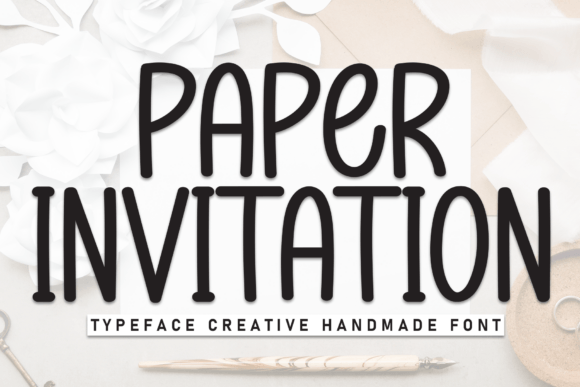
In the digital age, where screens dominate communication and templates often dictate design, there remains a profound desire for authenticity. This longing for the personal and the tactile has given rise to a resurgence in calligraphic typography. Among the many options available to designers today, Paper Invitation stands out as a distinctive choice. It is a charming display font that mimics the look of handwritten invitations, capturing the fluidity of ink on fiber. Its playful, flowing letters give a warm and friendly feel, making it perfect for events like weddings, birthdays, and parties. Beyond its aesthetic appeal, this typeface serves as a bridge between modern design efficiency and the timeless tradition of handcrafted correspondence.
The Philosophy Behind the Flowing Script
To truly appreciate Paper Invitation, one must understand the psychology of script fonts in visual communication. Unlike rigid sans-serif or formal serif typefaces, which convey stability and authority, script fonts evoke emotion, intimacy, and movement. They suggest that a human hand was involved in the creation process, even if the execution is digital. The defining characteristic of Paper Invitation is its ability to replicate the natural imperfections and variations found in genuine handwriting without sacrificing legibility.
When a designer selects this font, they are choosing to prioritize connection over cold precision. The strokes vary in thickness, mimicking the pressure changes of a fountain pen or brush. The loops extend gracefully, and the ascenders and descenders dance across the baseline. This dynamic quality prevents the text from feeling static. Instead, it invites the reader to slow down and engage with the message. In a world of rapid scrolling and fleeting notifications, the deliberate pace required to read a flowing script encourages a deeper level of attention and appreciation.
Balancing Playfulness with Readability
A common challenge with display scripts is maintaining readability while maximizing artistic flair. Many decorative fonts become illegible when used in larger blocks of text or at smaller sizes. However, Paper Invitation strikes a careful balance. It is easy to read and adds a personal touch to any printed invitation. The letterforms are distinct enough to prevent confusion between similar characters, such as 'l', 'i', and 't', yet connected enough to maintain the illusion of continuous writing.
This balance is achieved through thoughtful kerning and spacing. The font allows for natural breathing room between words, preventing the "wall of text" effect that can plague poorly designed scripts. For professionals working in graphic design, this reliability is crucial. It means that Paper Invitation can be used not just for headlines, but also for short paragraphs, details, and body copy within an invitation suite, provided the layout supports the flow of the text.
Strategic Applications in Event Design
The versatility of Paper Invitation extends across a wide spectrum of event planning scenarios. While it is most commonly associated with social gatherings, its application goes beyond simple aesthetics. It functions as a mood setter, establishing the tone of an event before a single guest arrives.
- Weddings and Ceremonies: For couples seeking a romantic or rustic theme, this font is invaluable. It pairs beautifully with watercolor backgrounds, textured paper, and gold foil stamping. The script suggests a love story written by hand, adding a layer of sentimentality to the ceremony details.
- Birthdays and Milestones: Celebrations of life require joy and energy. The playful nature of the font makes it ideal for children's birthday parties, sweet sixteen celebrations, and milestone anniversaries. It conveys excitement without appearing chaotic.
- Corporate and Social Mixers: Even in professional settings, a touch of warmth can be beneficial. A company gala, a charity fundraiser, or a networking brunch might benefit from the approachable vibe of Paper Invitation. It softens the corporate edge, making attendees feel more welcome and less like participants in a formal obligation.
Consider a scenario where a business owner is launching a boutique product line. A standard geometric font might communicate efficiency, but it could lack the soul of the brand. By incorporating Paper Invitation into the launch invitation, the owner signals that their products are crafted with care and attention to detail. The font becomes a silent ambassador for the brand's values.
Technical Considerations for Creators
For educators, researchers, and hobbyists exploring typography, understanding the technical implementation of Paper Invitation is essential. Like all display fonts, it requires specific handling to ensure the best results. One primary consideration is the medium. While digital files render the font perfectly on screens, the true potential of this typeface is realized in print.
When preparing files for printing, designers should pay close attention to resolution and vectorization. Because the font mimics the texture of paper and ink, low-resolution rasterization can result in jagged edges that break the illusion of smooth handwriting. Using vector-based software ensures that the curves remain crisp regardless of the scale. Furthermore, the choice of paper stock plays a significant role. A heavy cardstock with a slight tooth or texture enhances the perception of the ink sinking into the page, reinforcing the "handwritten" narrative.
Pairing and Hierarchy
No typeface exists in a vacuum. To create a cohesive design, Paper Invitation must be paired thoughtfully with complementary fonts. Since the script is already dominant and expressive, it works best when balanced with a neutral, clean sans-serif or a classic serif for supporting information. For example, the main event title might be in Paper Invitation, while the date, time, and location are set in a simple, legible font like Helvetica or Garamond.
This hierarchy guides the eye effectively. The script draws attention first, creating an emotional hook, while the secondary font provides the necessary logistical clarity. Overusing the script for every piece of text can lead to visual fatigue. The key is restraint; use Paper Invitation where it matters most to highlight the most important elements of the message.
The Emotional Impact of Personal Touches
Why does a font that looks like handwriting resonate so deeply? The answer lies in the concept of the "personal touch." In our increasingly automated lives, receiving something that feels handmade is a rarity. It signals effort, intention, and value. When a recipient holds an invitation featuring Paper Invitation, they subconsciously perceive the sender as someone who cares about the details.
This psychological effect is powerful for businesses and individuals alike. It transforms a transactional notification into a relational gesture. For a wedding planner, using this font can elevate the perceived value of their services. For a teacher sending out a newsletter to parents, it can foster a sense of community and warmth. The font acts as a tool for empathy, bridging the gap between the creator and the audience.
Moreover, the "warm and friendly feel" inherent in the design helps to lower barriers. Formal, stiff invitations can sometimes induce anxiety or formality that inhibits genuine interaction. In contrast, the inviting nature of Paper Invitation encourages a relaxed response. It tells the guest, "You are welcome here, exactly as you are."
Adapting to Modern Trends
Typography trends are cyclical, but the demand for authentic, organic styles shows no sign of fading. As digital fatigue sets in, the "analog aesthetic" continues to grow in popularity. Paper Invitation fits squarely into this trend, offering a way to bring the warmth of the physical world into digital and hybrid environments.
We are seeing this font style appear not just on printed cards, but on social media graphics, website headers, and email signatures. In these contexts, it serves as a counterpoint to the sleek, minimalist designs that often dominate the web. It adds character and personality to brands that might otherwise blend into the background. For content creators and marketers, leveraging this font can be a strategic move to differentiate their voice in a crowded marketplace.
Furthermore, the adaptability of the font allows for creative experimentation. Designers can manipulate opacity, add texture overlays, or combine it with other artistic elements like hand-drawn illustrations. This flexibility ensures that Paper Invitation remains relevant as design trends evolve. It is not a static relic of the past but a living tool for contemporary expression.
Conclusion on Typography and Connection
Ultimately, the value of Paper Invitation lies in its ability to communicate more than just words. It conveys a mood, a history, and a feeling of human connection. Whether used for a grand wedding, a casual birthday bash, or a professional announcement, it brings a unique charm that standard fonts cannot replicate. By understanding its characteristics, advantages, and appropriate use cases, designers and creators can harness its power to craft messages that resonate on a deeper level.
In a landscape saturated with generic content, the choice to use a font that mimics the look of handwritten invitations is a statement of intent. It declares that the message matters and that the recipient is valued. As we continue to navigate the intersection of technology and tradition, tools like Paper Invitation remind us that the most effective communication often comes from the heart, expressed through the elegance of a well-crafted stroke.