Soulshiver: Integrating a Haunted Aesthetic into Your Creative Workflow
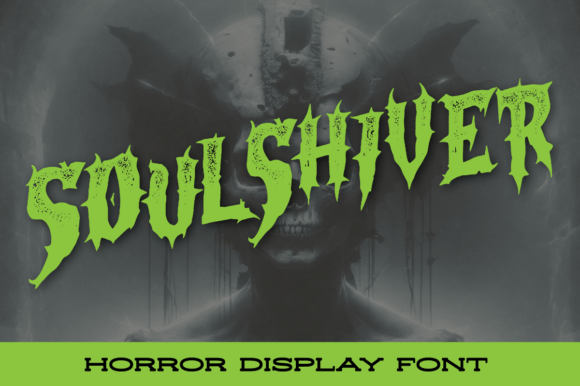
In the landscape of digital design, typography is rarely just about legibility; it is a primary vehicle for setting tone and evoking emotion. Soulshiver represents a distinct departure from the clean, geometric sans-serifs that dominate modern interfaces. It is a chilling, fear-inducing font characterized by sharp, jagged edges and thorn-like barbs protruding from the strokes of each letter. The characters are tall and slightly irregular, creating an immediate sense of tension and unease. Visually, every letter appears as if it has been violently scratched or clawed into place, evoking an otherworldly, haunted presence. For professionals ranging from graphic designers to content creators, understanding how to integrate Soulshiver into a project requires more than simply selecting a typeface. It demands a strategic approach to visual storytelling, workflow integration, and audience psychology.
Defining the Role of Soulshiver in Visual Strategy
Before downloading or purchasing any asset, it is crucial to define its function within the broader creative process. Soulshiver is not a workhorse font intended for body copy or data-heavy infographics. Its aggressive nature makes it unsuitable for long-form reading, where readability takes precedence. Instead, it serves as a specialized tool for impact moments. In a marketing campaign, it acts as the visual hook—the element that stops the scroll. In a branding exercise, it defines the personality of a niche product line, such as horror-themed merchandise, thriller novel covers, or edgy event promotions.
The integration of Soulshiver begins during the planning phase. When mapping out a project's visual hierarchy, you must identify where the "scare" factor or the element of danger fits. Is this a brand identity project for a haunted attraction? Is it a social media campaign for a new horror film release? Or perhaps it is a personal blog post exploring urban legends? By pinpointing these specific use cases early, you ensure that the font supports the narrative rather than distracting from it. The irregularity of the letters suggests chaos and unpredictability, which can be powerful when used sparingly to break up a structured layout.
Pre-Production: Preparation and Compatibility Checks
Successful implementation relies heavily on preparation. Before committing Soulshiver to a final design, you must assess technical compatibility and environmental fit. Most modern design platforms, including Adobe Illustrator, Photoshop, Canva, and web-based CSS environments, support custom font files. However, the jagged nature of the font means that rendering quality can vary across different devices and screen resolutions.
- File Format Verification: Ensure you have the correct file formats (OTF, TTF, or WOFF2) for your specific platform. Web usage requires optimized WOFF2 files to maintain the sharp details of the thorns without increasing load times.
- Resolution Testing: Because the font features fine, scratch-like details, test how it renders at small sizes. The thorn-like barbs may blur or disappear on low-resolution mobile screens, diminishing the intended effect.
- Color Contrast: The chaotic strokes of Soulshiver demand high contrast. Plan your color palette around this requirement. Dark backgrounds with light text often enhance the "clawed" appearance, making the letters pop with an eerie glow.
During this stage, also consider the legal and licensing aspects. If you are working for a client or a business, verify that the license allows for commercial use, especially if the output will be sold or distributed widely. Understanding these constraints prevents workflow interruptions later in the production cycle.
Execution: Applying Soulshiver During Design and Content Creation
Once the groundwork is laid, the execution phase involves applying Soulshiver to actual assets. This is where the font's unique characteristics—its tall, irregular structure and violent aesthetic—come into play. The key to effective use is restraint. Overusing a font as intense as Soulshiver can lead to visual fatigue, causing the audience to tune out rather than feel the intended unease.
Typography Pairing and Hierarchy
A critical component of the workflow is pairing Soulshiver with complementary typefaces. Since the font is so dominant, it should almost always be paired with a neutral, highly legible sans-serif or a classic serif for body text. This contrast creates a clear hierarchy: Soulshiver grabs attention for headlines, logos, or call-to-action buttons, while the secondary font handles the informational content. For example, in a poster design, the title might scream in Soulshiver, while the date, time, and location details remain in a clean, minimal font. This balance ensures that the message is communicated clearly without sacrificing the atmospheric impact.
Contextual Adaptation
The application of the font changes based on the medium. In print design, such as book covers or flyers, the texture of the paper can interact with the jagged edges of the letters, enhancing the tactile feel of being "scratched." In digital environments, animation offers new possibilities. You might animate the thorn-like barbs to pulse or flicker, simulating a heartbeat or a glitch, further amplifying the haunted presence. However, this requires careful timing; too much movement can become annoying rather than scary.
For bloggers and content creators, Soulshiver works best as a stylistic accent within headers or pull quotes. It breaks the monotony of standard web typography and signals to the reader that the content ahead is unconventional or intense. When writing a review of a horror game or a suspenseful story, using this font for section dividers can immerse the reader deeper into the topic before they even read the first sentence.
Post-Production: Quality Control and Consistency
After the design is complete, the focus shifts to quality control and consistency. Review all outputs to ensure that the Soulshiver elements render correctly across all intended platforms. Check for kerning issues; because the letters are irregular, automatic spacing algorithms sometimes struggle, leading to awkward gaps or overlaps between characters. Manual adjustment is often necessary to maintain the illusion of a cohesive, albeit chaotic, whole.
Consistency is vital for brand recognition. If you are using Soulshiver as part of a recurring series or a brand identity, establish a style guide. Define exactly how the font is used: what size ranges are acceptable, which colors are permitted, and what pairings are approved. This documentation helps maintain efficiency if multiple team members are involved in the project. It ensures that the "haunted" vibe remains consistent whether the asset is a website banner, a social media post, or a printed flyer.
Long-Term Integration and Strategic Outcomes
Integrating Soulshiver into your toolkit is a long-term investment in your creative capabilities. As trends shift, the demand for authentic, textured, and emotive typography continues to grow. Audiences are increasingly savvy and can spot generic stock designs instantly. Using a distinctive font like Soulshiver demonstrates a commitment to detail and a deep understanding of mood and atmosphere.
From a business perspective, the right typographic choice can influence conversion rates and engagement. A well-executed horror-themed campaign using this font can create a memorable brand association that lasts long after the initial interaction. It transforms a simple purchase decision or click into an emotional experience. Whether you are a freelancer pitching to a new client or an entrepreneur launching a product line, having a repertoire of specialized fonts allows you to offer tailored solutions that generic templates cannot match.
Ultimately, the value of Soulshiver lies in its ability to communicate complex emotions through form. It is a tool for those who understand that design is not just about organization, but about feeling. By approaching its use with a structured workflow—planning for impact, executing with precision, and reviewing for quality—you can harness its chilling power to elevate your projects. The result is work that does not just inform, but haunts the memory of the viewer, leaving a lasting impression that drives real-world outcomes.