Ronsbel: The Hybrid Typeface That Balances Playfulness and Precision
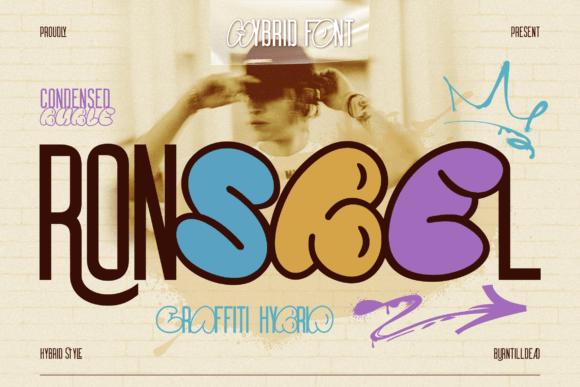
In the crowded landscape of digital design, finding a font that speaks both "fun" and "professional" is often a losing battle. Most typefaces lean heavily into one extreme: either they are rigid corporate sans-serifs that feel cold, or they are chaotic display fonts that undermine credibility. Ronsbel breaks this binary. Proudly presented as a hybrid masterpiece, Ronsbel seamlessly combines the playful essence of bubble graffiti with the sleek sophistication of monoline sans-serif design. It is not just another decorative font; it is a strategic tool for designers who need to evoke urban creativity without sacrificing legibility.
The unique character of Ronsbel lies in its construction. It takes the rounded, organic forms typical of bubble graffiti fonts to inject a sense of whimsy and approachability. Simultaneously, it applies the clean, consistent line weight of a modern monoline sans-serif to ensure clarity and refinement. This duality makes it perfect for projects seeking to blend street art aesthetics with high-end branding. However, like any powerful design asset, Ronsbel requires thoughtful application. Misunderstanding its strengths can lead to visual clutter, poor readability, or a brand identity that feels confused rather than clever.
Common Pitfalls When Integrating Hybrid Typefaces
One of the most frequent mistakes designers make when encountering a font like Ronsbel is assuming it is a "do-it-all" solution. Because it sits comfortably between two distinct styles, there is a temptation to use it for every element on a page, from headlines to body copy. This is a critical error. While Ronsbel is visually striking, its rounded forms and stylistic nuances are best suited for headlines, logos, and short statements. Using it for long paragraphs of text can fatigue the reader's eye and reduce comprehension speed.
Another common oversight involves ignoring the context of the audience. A font that screams "urban creativity" might resonate perfectly with a skateboarding apparel brand or a creative agency, but it could feel out of place for a law firm or a medical practice if used without careful modification. The mistake here isn't using the font itself, but failing to evaluate whether the "bubble" aesthetic aligns with the trust and authority required by the industry. When the typography clashes with the message, the result is a disconnect that undermines the entire communication strategy.
Furthermore, many users overlook the importance of pairing. Because Ronsbel is so distinctive, it demands a partner that steps back rather than competes. A frequent error is pairing Ronsbel with another display font or a highly stylized serif. This creates visual noise where no single element stands out. The goal of a hybrid typeface is to bridge gaps, not create a shouting match between different design languages.
How Typography Choices Impact Brand Perception
The consequences of these missteps go beyond simple aesthetics; they directly affect usability, efficiency, and brand satisfaction. When a logo uses Ronsbel at an inappropriate size or with insufficient spacing, the rounded edges can blur together, making the mark illegible on mobile screens or small business cards. This lack of scalability can force a rebrand down the line, costing time and money.
Consider a scenario where a startup chooses Ronsbel for their website headers but pairs it with a dense, traditional serif for body text. The contrast might be too jarring, causing the user to struggle to navigate the site hierarchy. In such cases, the "whimsy" intended by the designer is interpreted as unprofessionalism. Conversely, if the font is used correctly, the clean lines of Ronsbel guide the eye smoothly, while the rounded forms invite engagement. The difference between a successful campaign and a confusing one often comes down to these subtle execution details.
Strategic Pairing and Usage Guidelines
To avoid these pitfalls, you must treat Ronsbel as a headline specialist. Its strength is in grabbing attention, not in holding it for minutes at a time. For body copy, pair Ronsbel with a neutral, geometric sans-serif that shares similar x-height proportions but lacks the decorative bubbles. This creates a harmonious rhythm where the personality of the headers complements the readability of the text.
Spacing is another crucial factor often neglected. Bubble fonts naturally occupy more horizontal space due to their curves. If you do not increase your letter-spacing (tracking) slightly, the characters may appear cramped and heavy. Experiment with adding a few points of tracking to let the rounded forms breathe. This small adjustment enhances the "sleek sophistication" aspect of the monoline structure, ensuring the font looks intentional rather than accidental.
When applying Ronsbel to branding, test it across various mediums before finalizing. Does the rounded edge hold up when embroidered on a cap? Does the thin monoline stroke remain visible when printed on dark packaging? These practical checks are essential. A font that looks great on a monitor might fail in physical production if the line weight is too delicate or the curves are too complex for the manufacturing process.
Evaluating Ronsbel for Your Specific Project
Before downloading or purchasing Ronsbel, take a moment to audit your project requirements. Ask yourself: Does my brand voice require a touch of urban rebellion or creative energy? If the answer is yes, Ronsbel is likely a strong contender. However, if your primary goal is strict formalism, this hybrid might introduce too much personality.
Look at your competitors. Are they all using rigid, standard fonts? In that case, Ronsbel could be the differentiator that makes your brand memorable. But if the entire industry has moved toward playful, rounded aesthetics, using Ronsbel might make you blend in rather than stand out. Context is king. The font should solve a problem, not just add decoration.
Finally, consider the longevity of the trend. While bubble graffiti elements have roots in enduring street culture, trends shift. The beauty of Ronsbel lies in its balance; the monoline foundation gives it a timeless quality that prevents it from feeling dated quickly. By anchoring the playful elements in a structured framework, you future-proof your design against fleeting fads.
Maximizing Value Through Correct Application
The true value of Ronsbel is unlocked when you understand it as a bridge between worlds. It allows you to communicate warmth and approachability without losing the sharpness required for modern business. By avoiding the trap of overuse, respecting the limits of legibility, and carefully curating pairings, you can leverage this typeface to elevate your work.
Whether you are designing a poster for a music festival, creating a logo for a tech startup, or crafting social media graphics for a lifestyle blog, Ronsbel offers a versatile toolkit. Just remember that versatility does not mean indiscriminate use. Treat it with the same respect you would a fine instrument. Use it where it shines, support it with the right partners, and ensure it serves the message, not the other way around. With the right approach, Ronsbel becomes more than just a font; it becomes a defining characteristic of your visual identity.