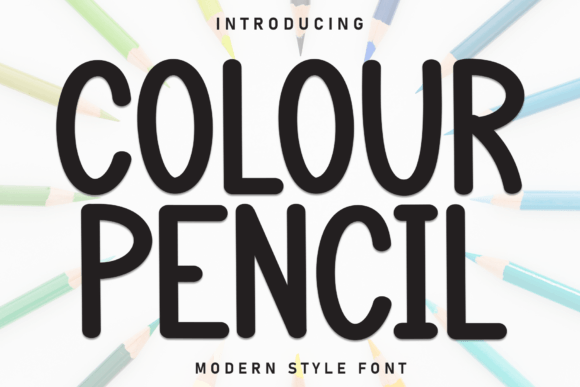
Colour Pencil: A Bold, Playful Display Font for Creative Projects
In the crowded landscape of digital design, standing out often requires more than just a clean layout; it demands personality. That is exactly where Colour Pencil comes in. Unlike standard typefaces that prioritize neutrality, this font embraces the chaotic charm of a child's drawing set. It mimics the texture, uneven edges, and vibrant saturation of wax crayons or colored pencils on paper. For designers, marketers, and small business owners looking to inject warmth and approachability into their brand identity, Colour Pencil offers a distinct visual voice that feels handmade yet polished enough for professional use.
The Visual Personality of a Handwritten Display Typeface
At its core, Colour Pencil is a display font, meaning it is designed specifically for headlines, logos, and short bursts of text rather than long paragraphs. Its defining characteristic is the simulated texture of the stroke. If you look closely at the letterforms, you will notice slight variations in line weight and color intensity, replicating the way a physical pencil deposits pigment onto grainy paper. This creates an organic, imperfect aesthetic that contrasts sharply with the sterile precision of modern sans serif fonts.
The personality of this typeface is undeniably playful, energetic, and nostalgic. It evokes memories of school projects, scrapbooking, and creative brainstorming sessions. While it shares some DNA with other handwritten fonts, Colour Pencil distinguishes itself through its boldness. The strokes are thick and confident, ensuring legibility even when scaled down slightly or used in high-contrast environments. It avoids the overly decorative flourishes found in many script fonts, opting instead for a chunky, blocky structure that feels sturdy despite its whimsical appearance. This balance makes it a versatile asset for anyone trying to bridge the gap between casual creativity and commercial viability.
Ideal Applications for Branding and Marketing
Because of its strong visual impact, Colour Pencil shines in specific contexts where engagement and emotional connection are paramount. It is particularly effective in packaging design for products targeting families, children, or hobbyists. Imagine a box of eco-friendly art supplies, a jar of natural honey, or a line of boutique pet treats; using this font immediately signals that the product is crafted with care and fun in mind.
- Logo Design: Startups and creative agencies can use Colour Pencil to create memorable logos that feel human-centric. It works exceptionally well for brands in education, entertainment, food and beverage, and lifestyle sectors.
- Social Media Graphics: In the fast-scrolling environment of Instagram or TikTok, static text often gets ignored. Colour Pencil grabs attention instantly. Use it for quote overlays, event announcements, or promotional banners to break the monotony of corporate typography.
- Editorial Design: Magazine covers, blog headers, and newsletter titles benefit from the font's ability to set a tone. It suggests that the content inside is accessible, entertaining, and not bogged down by jargon.
- Web Design: When used sparingly as a hero headline or call-to-action button, this font adds a layer of interactivity and friendliness to a website, making the user experience feel less transactional.
However, it is crucial to understand its limitations. As a display typeface, it should rarely be used for body copy. Long blocks of text in Colour Pencil would strain the reader's eyes due to the irregular shapes and lack of uniformity. Instead, reserve it for moments where you want to shout, celebrate, or invite the audience to play.
Strategic Considerations for Readability and Hierarchy
Integrating a character-rich font like Colour Pencil into a project requires a strategic approach to visual hierarchy. The goal is to let the font do the heavy lifting without overwhelming the message. Because the letters have such a unique texture, they naturally draw the eye. This makes them perfect for establishing the top level of your design hierarchy—the main headline or the primary focal point.
To maintain professionalism and ensure readability, you must pair Colour Pencil with a neutral counterpart. A clean, geometric sans serif font or a classic serif font works best here. The contrast between the rough, colorful strokes of Colour Pencil and the smooth, structured lines of a secondary typeface creates a dynamic tension that keeps the design balanced. For example, if your headline reads "Summer Sale" in Colour Pencil, your sub-headline detailing the offer should be in a simple, legible font like Helvetica, Open Sans, or Lato. This combination ensures that while the headline captures attention, the supporting information remains easy to digest.
Furthermore, consider the background against which you place the text. Since Colour Pencil simulates a colored medium, it looks best on backgrounds that mimic paper textures, soft pastels, or solid whites. Avoid placing it over busy patterns or dark, noisy backgrounds, as the internal texture of the letters might get lost. White space is your friend here; give the font room to breathe so its playful nature doesn't become cluttered.
Practical Guide to Selecting and Licensing Your Assets
Before committing to Colour Pencil for a major campaign, take time to evaluate its fit within your broader brand strategy. Does the playful vibe align with your company values? If you are a law firm or a medical practice, this font might undermine your authority unless used very selectively for community outreach events. However, for entrepreneurs selling handmade goods, coaches offering life workshops, or publishers creating children's books, it could be the perfect match.
When testing the font, download a preview file and experiment with different sizes and weights. Check how it renders on mobile screens versus large format print. Sometimes, the fine details of a textured font can blur on low-resolution displays, so always verify clarity across devices. Additionally, review the included styles. Many premium versions of such fonts come with alternate characters, ligatures, or different color variations that allow for further customization.
Finally, never overlook the importance of licensing. As a commercial font, Colour Pencil likely requires a specific license depending on how you intend to use it. Are you embedding it in a web app, printing thousands of brochures, or using it for a client logo? Ensure you purchase the appropriate rights to avoid legal complications down the road. Investing in a legitimate license supports the creator and guarantees you access to updates and customer support.
Ultimately, Colour Pencil is more than just a decorative element; it is a tool for storytelling. It tells your audience that your brand is human, creative, and unafraid to have a little fun. By understanding its strengths and applying it with intention, you can transform ordinary designs into memorable experiences that resonate deeply with your target market.