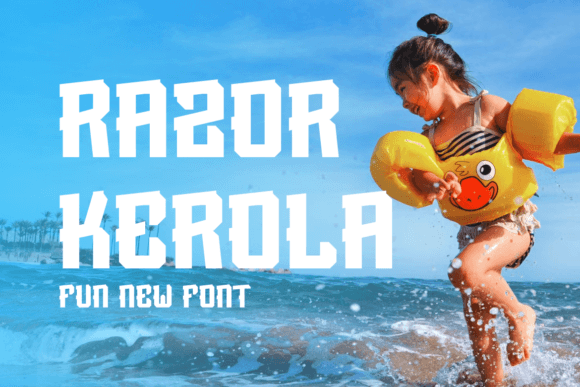
Razor Kerola: A Bold Typography Choice for Modern Creators
In the crowded landscape of digital design, finding a typeface that cuts through the noise without shouting is a rare feat. Razor Kerola emerges as a distinctive solution for designers who need their work to command immediate attention while retaining a sense of artistic flair. It is not merely a font; it is a visual tool designed to inject personality into projects that demand a specific, edgy, yet professional aesthetic. Whether you are crafting the title card for an independent film or designing a limited-edition album cover, this typeface offers a unique structural balance that sets your content apart from generic sans-serifs and overused serifs.
The Essence of Razor Kerola in Design
At its core, Razor Kerola is defined by its sharp geometric lines and dynamic spacing. Unlike traditional display fonts that rely on excessive ornamentation, this typeface achieves impact through form and negative space. The characters possess a weight that feels substantial on screen but remains legible at various sizes. This makes it an incredibly versatile asset for creators who need a font that works equally well in high-resolution print media and responsive web environments.
What truly sets it apart is its ability to convey movement. Even when static, the letterforms suggest a forward momentum, making them ideal for titles that imply action, energy, or modernity. When you immerse yourself in the uniqueness of this font, you begin to see how it can transform a standard layout into a statement piece. It bridges the gap between brutalist minimalism and expressive typography, offering a middle ground that appeals to a broad demographic of adult audiences seeking contemporary aesthetics.
Cinematic Impact: Titles and Scene Labels
For filmmakers, graphic novelists, and video editors, the opening moments of a project are critical. Razor Kerola excels in these high-stakes environments. Imagine a thriller movie where the title sequence needs to establish tension immediately. The sharp edges of the font mimic the feeling of a blade, subtly reinforcing the genre without needing explicit imagery. It provides a stark contrast against dark backgrounds, ensuring that movie titles pop with clarity and authority.
Beyond main titles, the font proves invaluable for scene labels and lower-thirds in documentary or narrative films. In fast-paced editing sequences, readability is paramount. Razor Kerola maintains its integrity even when animated or overlaid on complex video footage. Its distinct character shapes prevent confusion between similar letters like 'I', 'l', and '1', which is a common pitfall in many display fonts. This practical reliability allows directors and editors to focus on storytelling rather than worrying about whether the audience can read the text.
Real-World Application in Media
- Film Posters: Use the font for the primary title to create a memorable silhouette that stands out in thumbnail views on streaming platforms.
- Streaming Graphics: Apply it to "Now Playing" overlays or episode guides where quick recognition is essential.
- Trailer Text: Leverage its boldness for dramatic reveal moments in promotional trailers.
Music and Live Events: Gig Posters and Album Art
The music industry thrives on visual identity, and Razor Kerola has found a natural home within it. From underground indie bands to mainstream rock acts, the font's aggressive yet stylish look resonates with the energy of live performance. Gig posters often serve as the first point of contact between an artist and a potential fan. In this context, the typography must do heavy lifting. It needs to scream "event" while providing all necessary details clearly.
When designing album covers, the font allows artists to experiment with texture and layering. Because the letterforms are so distinct, they hold up well when distressed, textured, or combined with other graphical elements. You might see Razor Kerola used in a grunge style for a punk band or in a clean, metallic finish for an electronic act. Its adaptability ensures that it doesn't pigeonhole the music into a single genre but rather enhances the specific vibe the artist is trying to convey.
Consider the scenario of a festival lineup poster. With dozens of names competing for attention, a standard font might get lost. However, using Razor Kerola for headlining acts creates a visual hierarchy that guides the viewer's eye naturally. It adds a touch of exclusivity and cool factor that suggests the event is worth attending.
Branding and Logo Design
Embracing the opportunity to embellish logos is perhaps one of the most strategic uses of this typeface. For startups, tech companies, and creative agencies, a logo needs to be memorable and scalable. Razor Kerola offers a modern edge that signals innovation and confidence. It works particularly well for brands in the gaming, cybersecurity, fashion, and automotive sectors—industries where strength and precision are key brand values.
Designers often struggle to find a font that looks good both as a standalone icon and as part of a full sentence. This font solves that problem. Its balanced proportions allow it to function effectively as a monogram or an abbreviated mark. When paired with a simpler secondary font for body copy, it creates a sophisticated contrast that elevates the entire brand identity.
Furthermore, the font's unique structure lends itself well to custom modifications. A designer might tweak a specific character to align perfectly with a brand's symbol, creating a cohesive lockup that feels bespoke. This level of customization is crucial for businesses aiming to stand out in saturated markets.
Practical Considerations Before You Choose
While Razor Kerola offers immense creative potential, it is important to approach its use with intention. As with any display font, context is king. It is best suited for headlines, short phrases, and focal points rather than long blocks of body text. Using it for paragraphs can lead to readability issues due to its stylistic flourishes and tight kerning options.
Another consideration is the audience. While the font appeals strongly to adults aged 20–50 who appreciate modern design trends, it may feel too aggressive for industries requiring a soft, traditional, or purely corporate tone, such as healthcare or legal services. Always test the font in the final medium before committing. Check how it renders on mobile screens versus large billboards. Ensure that the white space around the letters is sufficient to prevent the design from feeling cluttered.
Licensing is also a practical factor. Ensure you have the appropriate rights for commercial use, especially if the design will be used for merchandise, advertising campaigns, or public broadcasting. Understanding the limitations of the license prevents legal headaches down the road and ensures your creative investment is protected.
Maximizing the Potential
To get the most out of Razor Kerola, experiment with color and background interactions. High-contrast combinations, such as neon on black or white on deep charcoal, tend to amplify its impact. Don't be afraid to break grid lines slightly to add a sense of organic movement, mimicking the font's inherent dynamism. By treating the typeface as an active element of the composition rather than just a container for words, you unlock its full expressive power.
Ultimately, Razor Kerola is more than just a set of characters; it is a catalyst for creativity. It invites designers to push boundaries and create work that is not only seen but felt. Whether you are launching a new product, promoting a concert, or branding a startup, this font provides the visual punch needed to make your message unforgettable.